

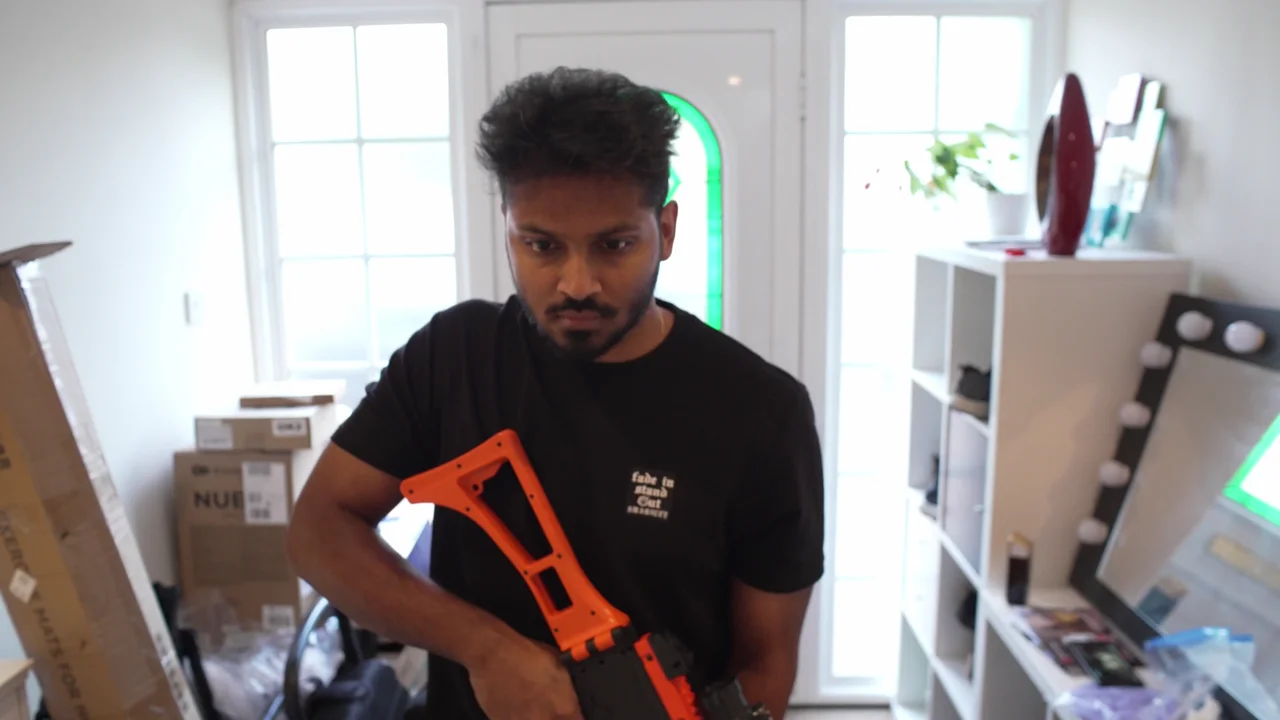
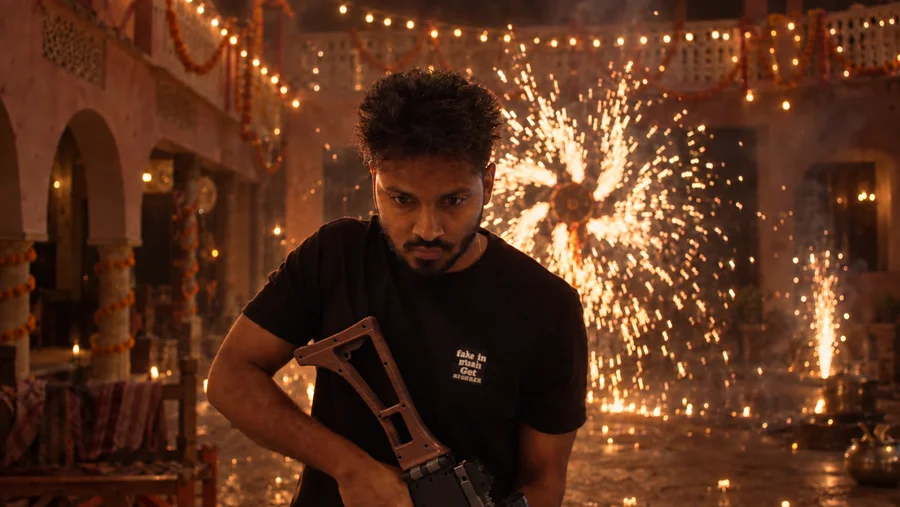
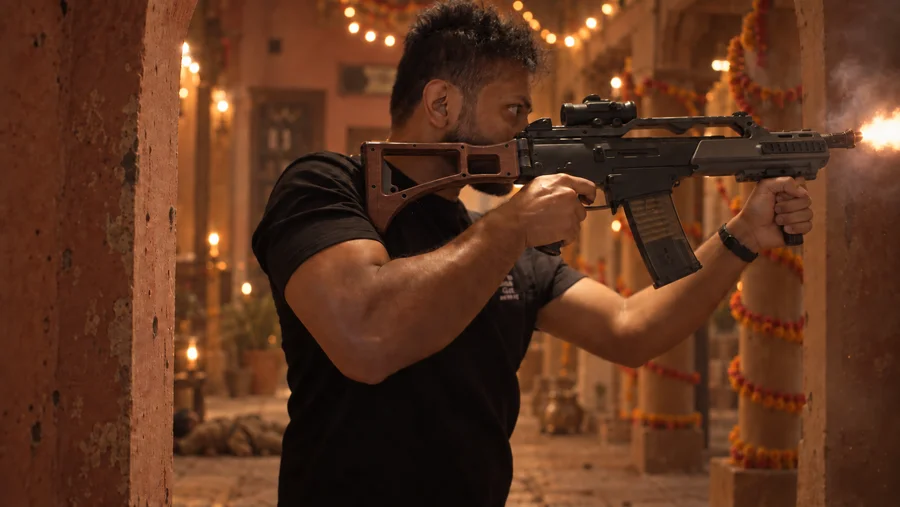
Edit this video into a grounded, photorealistic cinematic action scene. Stay close to the original performance, sequence, pace and continuous camera movement. Keep the main man's real face, hair, beard, skin tone, physique, arms, black T-shirt, sleeves, lettering and accessories. Preserve his natural facial exposure. Allow subtle adjustments to weapon handling, recoil and follow-through where they make the existing action more believable. Ideally try to just just add firing based on actions in original video. Use @Image1 for the Faithful courtyard and spark-wheel atmosphere, and @Image2 for the connected corridor and dark-metal/walnut finish. These are design guides only: ignore their people and poses. The performer comes from the video; never insert or recreate a reference still. Replace the modern house with one coherent decorated compound: weathered dusty-rose and ochre plaster, marigolds, warm string lights, dark timber, scuffed stone and patterned rugs. Keep natural skin, readable depth, moderate haze and restrained distant fire. A rotating white-gold spark wheel peaks behind him as his head lifts, stays fixed in the opening courtyard and leaves view as the camera turns. Extend a believable hallway beyond the doorway along the rifle's actual aiming direction, with continuous floor depth and receding arches. His shots travel down that passage. Continue the same architecture into the inner hall, keeping the action space connected and clear around him. Make the original rifle and pistol look real using dark gunmetal, with subtle walnut accents on the rifle. Retain their recognisable designs, scale and natural contact with his hands. Let the model resolve believable small mechanical details without changing the type of weapon. Read the performance rather than inventing a new fight. When he fires, add a brief muzzle flash, gunshot, subtle recoil and a plausible impact or opponent reaction in the direction he is aiming. Match the hit and brief cry to that shot. An existing pan can reveal the opponent finishing the same fall; it must not create another shot or restart the reaction. Let occlusion and offscreen space work naturally. Use one or two distinct fictional adult opponents in worn civilian clothes: a brown patterned shirt with charcoal trousers, or a headwrap, knitted vest and loose olive-brown tunic. No military uniforms, tactical gear or masks. Keep their appearance and location consistent, including after a fall; no unrelated bodies on the floor. Keep impacts restrained, without gore. Preserve the progression from rifle action to pistol draw, movement into the hall, duck/drop and floor finish. A believable nearby return-fire impact can motivate his existing drop. Let the model choose natural reaction details and staging that fit his movement, the camera and the same connected space. Keep the main performer uninjured and clearly readable. Audio: gunshots and occasional brief reaction cries only. No music, singing or dialogue. No added cuts, slow motion, captions or watermark.
Edit this video into a grounded, photorealistic cinematic action scene. Stay close to the original performance, sequence, pace and continuous camera movement. Keep the main man's real face, hair, beard, skin tone, physique, arms, black T-shirt, sleeves, lettering and accessories. Preserve his natural facial exposure. Allow subtle adjustments to weapon handling, recoil and follow-through where they make the existing action more believable. Ideally try to just just add firing based on actions in original video. Use @Image1 for the Faithful courtyard and spark-wheel atmosphere, and @Image2 for the connected corridor and dark-metal/walnut finish. These are design guides only: ignore their people and poses. The performer comes from the video; never insert or recreate a reference still. Replace the modern house with one coherent decorated compound: weathered dusty-rose and ochre plaster, marigolds, warm string lights, dark timber, scuffed stone and patterned rugs. Keep natural skin, readable depth, moderate haze and restrained distant fire. A rotating white-gold spark wheel peaks behind him as his head lifts, stays fixed in the opening courtyard and leaves view as the camera turns. Extend a believable hallway beyond the doorway along the rifle's actual aiming direction, with continuous floor depth and receding arches. His shots travel down that passage. Continue the same architecture into the inner hall, keeping the action space connected and clear around him. Make the original rifle and pistol look real using dark gunmetal, with subtle walnut accents on the rifle. Retain their recognisable designs, scale and natural contact with his hands. Let the model resolve believable small mechanical details without changing the type of weapon. Read the performance rather than inventing a new fight. When he fires, add a brief muzzle flash, gunshot, subtle recoil and a plausible impact or opponent reaction in the direction he is aiming. Match the hit and brief cry to that shot. An existing pan can reveal the opponent finishing the same fall; it must not create another shot or restart the reaction. Let occlusion and offscreen space work naturally. Use one or two distinct fictional adult opponents in worn civilian clothes: a brown patterned shirt with charcoal trousers, or a headwrap, knitted vest and loose olive-brown tunic. No military uniforms, tactical gear or masks. Keep their appearance and location consistent, including after a fall; no unrelated bodies on the floor. Keep impacts restrained, without gore. Preserve the progression from rifle action to pistol draw, movement into the hall, duck/drop and floor finish. A believable nearby return-fire impact can motivate his existing drop. Let the model choose natural reaction details and staging that fit his movement, the camera and the same connected space. Keep the main performer uninjured and clearly readable. Audio: gunshots and occasional brief reaction cries only. No music, singing or dialogue. No added cuts, slow motion, captions or watermark.